
Tenants in Parramatta usually inherit an office space with existing wear, shared-building rules, and tight turnaround times. A clear checklist helps them control quality, avoid disputes, and keep staff and visitors comfortable.
This guide breaks down what office cleaning Parramatta tenants should include, from daily touchpoints to end-of-lease details, with an Australian workplace focus.
What should be covered in the daily cleaning checklist?
Daily items should focus on hygiene, presentation, and high-touch points people notice immediately. For most teams, a tight daily routine prevents odours, sticky surfaces, and clutter from building up.
For office cleaning Parramatta tenants, daily tasks typically include:
- Empty all general waste and recycling bins, replace liners, and wipe bin lids.
- Wipe reception counters, meeting room tables, and shared desks.
- Disinfect high-touch points: door handles, lift buttons (if accessible), light switches, tapware, fridge handles, microwaves, and kettle handles.
- Kitchen tidy: wipe benches, splashbacks, and appliance fronts.
- Quick vacuum of entryways and high-traffic lanes, plus spot-mop spills.
What weekly tasks should tenants expect their cleaners to complete?
Weekly cleaning should tackle what daily wipes miss, especially dust, edges, and build-up in shared areas. It is also where the space starts to feel properly “maintained” rather than just “not dirty.”
A weekly office cleaning Parramatta checklist often includes:
- Full vacuum of all carpeted areas, including under accessible furniture and along skirting.
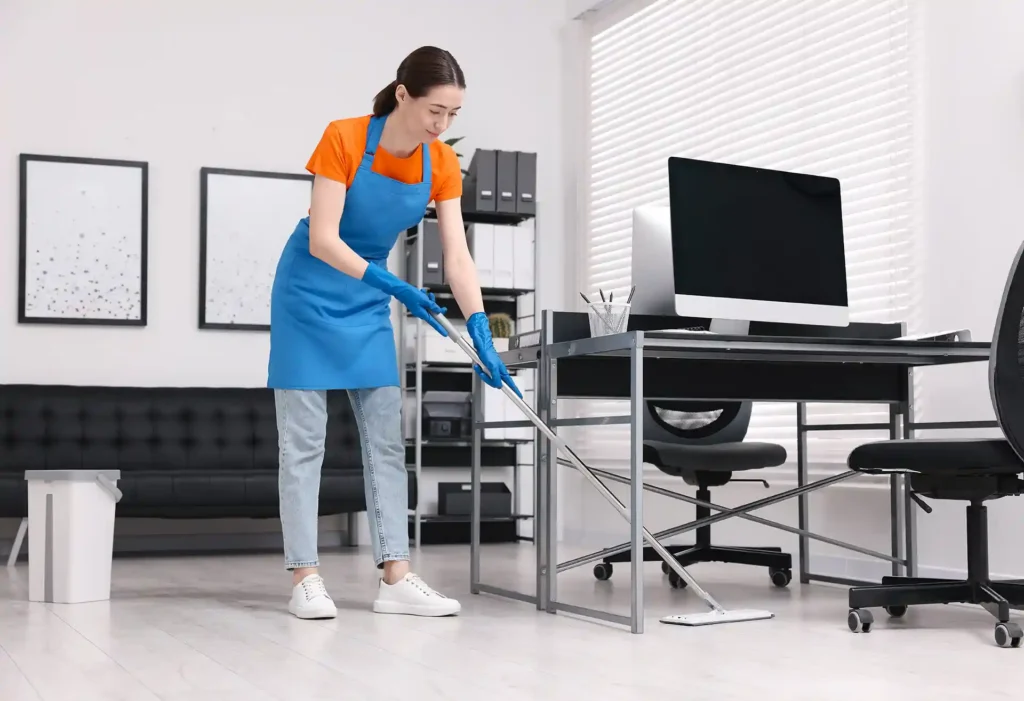
- Mop hard floors thoroughly, including corners and behind doors.
- Dust reachable ledges, partitions, frames, and workstation surfaces not covered daily.
- Clean internal glass (meeting rooms, entry doors) and remove fingerprints.
- Wipe chair arms, chair backs, and chair bases where dust collects.
How should toilets and amenities be checked and documented?
Toilets can create the fastest complaints, so tenants should track both cleaning and restocking. The checklist should be written so a supervisor can verify it in under a minute.
For office cleaning Parramatta amenities, include:
- Clean and disinfect toilets, urinals, basins, tapware, and cubicle locks.
- Polish mirrors and spot-clean walls around basins and hand dryers.
- Mop floors with disinfectant and pay attention to corners and behind doors.
- Restock toilet paper, hand soap, paper towel, and sanitary bins (if provided).
- Note any maintenance issues: leaks, blocked toilets, broken dispensers, or smells.
What kitchen and breakout cleaning items are most often missed?
Kitchens look fine until grime builds around “touch-and-go” areas. Tenants should list the fiddly parts so cleaners do not skip them when rushed.
A practical office cleaning Parramatta kitchen section includes:
- Degrease microwave interior and wipe the turntable.
- Clean fridge exterior and handles, then wipe shelves if requested.
- Wipe inside the sink bowl and around drain strainers.
- Disinfect kettle base area, appliance cords, and power switch plates.
- Clean cupboard fronts near the bin area and remove drip marks.
Which high-touch points should be prioritised for hygiene?
High-touch points spread germs quickly in open-plan offices and shared buildings. Tenants should list them explicitly because “wipe surfaces” is too vague to enforce.
For office cleaning Parramatta hygiene control, the checklist should call out:
- Door handles, push plates, and access control keypads.
- Shared printers and scanner touchscreens.
- Meeting room remotes, VC equipment buttons, and whiteboard markers tray.
- Stair rails and kitchenette cupboard pulls.
- Reception pens, clipboards, and visitor sign-in stations.
What floor care should be included for carpet, vinyl, and tiles?
Floors shape first impressions and indoor air quality, particularly with carpet dust. Tenants should separate routine care from periodic deep work so expectations and pricing stay clear.
For office cleaning Parramatta floor care, include:
- Daily or weekly vacuum frequency by zone (reception, corridors, open plan).
- Spot treatment for stains, gum, and spills with an agreed response time.
- Hard floor mopping method (neutral cleaner, no sticky residue) and drying checks.
- Periodic machine scrub for vinyl/tiles in kitchens and entries.
- Scheduled carpet steam clean or hot water extraction (often quarterly or biannually).
How should windows, glass, and partitions be handled?
Glass makes offices look modern, but it shows fingerprints, smears, and dust fast. Tenants should define what “internal” versus “external” means, especially in multi-storey Parramatta buildings.
A solid office cleaning Parramatta checklist for glass includes:
- Internal glass: meeting room walls, entry doors, side panels, and internal partitions.
- Spot-cleaning frequency versus full clean frequency.
- Frames and tracks wiping where reachable.
- External windows: confirm if building management controls this service.
- Safety access notes: no ladders beyond agreed limits, and only compliant equipment.
What should be included for desks, workstations, and shared equipment?
Most offices have a mix of hot desks, fixed desks, and “do not touch” areas. Tenants should clarify boundaries to protect privacy and avoid cleaners skipping everything.
For office cleaning Parramatta workstation cleaning, include:
- Shared desks and hot desks: wipe desktops, disinfect edges, and clean phone handsets if shared.
- Under-desk vacuuming in open areas where accessible.
- Spot-clean fingerprints on monitor backs and cable trays only if approved.
- Rules for personal items: cleaners do not move documents, wallets, or medication.
- Shared equipment zones: printer benches, stationery cupboards, and mail areas.
How can tenants make the checklist align with building management rules?
Many Parramatta commercial towers have loading dock hours, lift booking rules, waste disposal processes, and after-hours security. If the checklist ignores these, cleaning can become inconsistent or incomplete.
For office cleaning Parramatta in managed buildings, tenants should add:
- Approved entry times, alarm codes, and sign-in requirements.
- Loading dock and goods lift booking procedures for periodic services.
- Waste disposal locations, recycling rules, and prohibited items.
- Rules for noise after hours, including vacuuming in certain zones.
- A clear contact list for security, facilities, and the cleaning supervisor.
What periodic deep cleaning tasks should be scheduled monthly or quarterly?
Deep cleaning keeps a space from slowly degrading, even when daily cleaning is done well. Tenants should schedule these items so they do not become end-of-lease surprises.
A periodic office cleaning Parramatta schedule may include:
- High dusting: air vents, ceiling corners, light fittings (where safe and reachable).
- Upholstery cleaning for fabric chairs and reception seating.
- Detailed kitchen clean: inside cupboards, fridge clean-out (with tenant coordination).
- Tile grout detailing in amenities and kitchen splash zones.
- Sanitising and deodorising bins and bin rooms if the tenancy controls them.

What supplies, consumables, and responsibilities should be clarified?
Confusion about who supplies what leads to missed refills and blame-shifting. Tenants should specify what the cleaner supplies versus what the tenant orders.
For office cleaning Parramatta supply clarity, include:
- Consumables list: hand soap, paper towel, toilet paper, bin liners, dishwasher tablets.
- Cleaning chemicals: specify low-odour options and any allergy constraints.
- Equipment: vacuum type, mop system, and whether equipment is stored on-site.
- Storage location: locked cleaner’s cupboard access and restock process.
- Reporting: how shortages are logged and how quickly they must be replenished.
How should tenants check quality, safety, and compliance?
A checklist is only useful if tenants can verify it and raise issues quickly. They should build in simple pass/fail checks and safety confirmations.
For office cleaning Parramatta quality control, include:
- A weekly supervisor sign-off with photos for key zones (reception, kitchens, toilets).
- A defect log: missed bins, streaky glass, odours, or sticky floors, with time to fix.
- Safety checks: wet floor signage used, cords not left across walkways, chemicals stored safely.
- Incident reporting: breakages, lost property, or security concerns reported immediately.
- Review cadence: monthly meeting or call to adjust scope as headcount changes.
What should be on an end-of-lease or make-good cleaning checklist?
End-of-lease cleaning should target bond return and landlord expectations. Tenants should request the landlord or agent’s make-good requirements early, then match the checklist to them.
For office cleaning Parramatta end-of-lease scope, include:
- Full internal glass clean, including frames and door tracks.
- Carpet steam clean with receipt, plus stain treatment attempts documented.
- Detailed kitchen clean: inside fridge, microwave, cupboards, and splashback degrease.
- Amenities detail: grout, vents, dispensers, and scale removal on tapware.
- Removal of marks on walls where included in make-good, plus final rubbish removal.
What’s the simplest way for tenants to turn this into a working checklist?
They should keep it short enough to use, but specific enough to enforce. The best approach is to split it into daily, weekly, monthly, and end-of-lease sections, then assign an owner for sign-off.
For office cleaning Parramatta tenants, the checklist works best when it includes clear frequencies, “included vs excluded” notes, and a single escalation contact. That way, cleaning stays consistent, problems get fixed fast, and the office stays presentable all year.
Daily cleaning for office tenants in Parramatta should focus on hygiene, presentation, and high-touch points. Tasks typically include emptying waste and recycling bins with liner replacement, wiping reception counters, meeting room tables, and shared desks, disinfecting door handles, lift buttons, light switches, tapware, fridge handles, microwaves, and kettle handles. Additionally, the kitchen should be tidied by wiping benches, splashbacks, and appliance fronts, along with quick vacuuming of entryways and high-traffic lanes plus spot-mopping any spills.
Weekly cleaning should address areas missed by daily wipes to prevent dust build-up and maintain a properly cleaned environment. For Parramatta office tenants, this includes full vacuuming of all carpeted areas including under accessible furniture and along skirting boards; thorough mopping of hard floors including corners and behind doors; dusting reachable ledges, partitions, frames, and workstation surfaces not covered daily; cleaning internal glass such as meeting room walls and entry doors to remove fingerprints; and wiping chair arms, backs, and bases where dust tends to accumulate.
Tenants should implement a checklist that allows supervisors to verify toilet cleaning and restocking quickly. This includes cleaning and disinfecting toilets, urinals, basins, tapware, cubicle locks; polishing mirrors; spot-cleaning walls around basins and hand dryers; mopping floors with disinfectant paying attention to corners and behind doors; restocking toilet paper, hand soap, paper towels, sanitary bins if provided; and noting any maintenance issues such as leaks or broken dispensers to avoid complaints.
Commonly missed kitchen tasks include degreasing microwave interiors including wiping turntables; cleaning fridge exteriors and handles plus wiping shelves upon request; wiping inside sink bowls around drain strainers; disinfecting kettle base areas along with appliance cords and power switch plates; as well as cleaning cupboard fronts near bin areas to remove drip marks. Including these ensures kitchens remain hygienic even in busy office environments.
High-touch points critical for hygiene control include door handles, push plates, access control keypads; shared printer and scanner touchscreens; meeting room remotes, video conferencing equipment buttons, whiteboard marker trays; stair rails; kitchenette cupboard pulls; reception pens; clipboards; visitor sign-in stations. Explicitly listing these points helps enforce thorough disinfection routines to reduce germ spread.
Floor care should distinguish routine from periodic deep cleaning. Daily or weekly vacuuming frequency by zones such as reception or corridors is essential. Spot treatment protocols for stains or gum with agreed response times prevent lasting damage. Hard floors require mopping with neutral cleaners ensuring no sticky residue remains followed by drying checks. Periodic machine scrubbing of vinyl or tile floors in kitchens or entryways is recommended alongside scheduled carpet steam cleaning or hot water extraction typically quarterly or biannually to maintain air quality and appearance.