

What Are the Standard Dimensions of Queen Mattresses in Australia?
In Australia, a standard queen mattress is roughly 153 cm wide x 203 cm long. Some brands vary by a few centimetres, so always check the spec sheet before you buy, especially if your room is tight.
This size describes the mattress only. It does not include the extra centimetres added by a bed frame, headboard depth, built-in storage, or thick upholstered sides, which can all change how the bed sits in the room.
A quick practical note when comparing sizes: moving from queen to king usually adds width more than length, so the real pressure point becomes side clearance. If you cannot keep comfortable walkways with a queen, a king will almost certainly feel cramped.
Lifestyle matters too. Couples who want more personal sleep space may love a king, but many Australian bedrooms, flats, and guest rooms simply function better with a queen once you factor in circulation space and storage.
Queen vs King Mattresses: what changes in room size needs?
From a spatial planning standpoint, queen mattresses often represent the baseline for balanced room utilisation, whereas upgrading beyond this footprint—such as to a king—introduces significantly higher side clearance requirements. Length is rarely the constraint unless the room is unusually short, but lateral access directly impacts daily usability, from dressing routines to linen changes.
A practical decision rule is this: if your space cannot maintain comfortable walkways around queen mattresses, moving to a larger size is unlikely to deliver real-world value. While additional sleeping width may seem beneficial, it can come at the expense of overall room functionality—an outcome that typically has greater long-term impact.
How Much Walking Space Should You Leave Around Queen Mattresses?
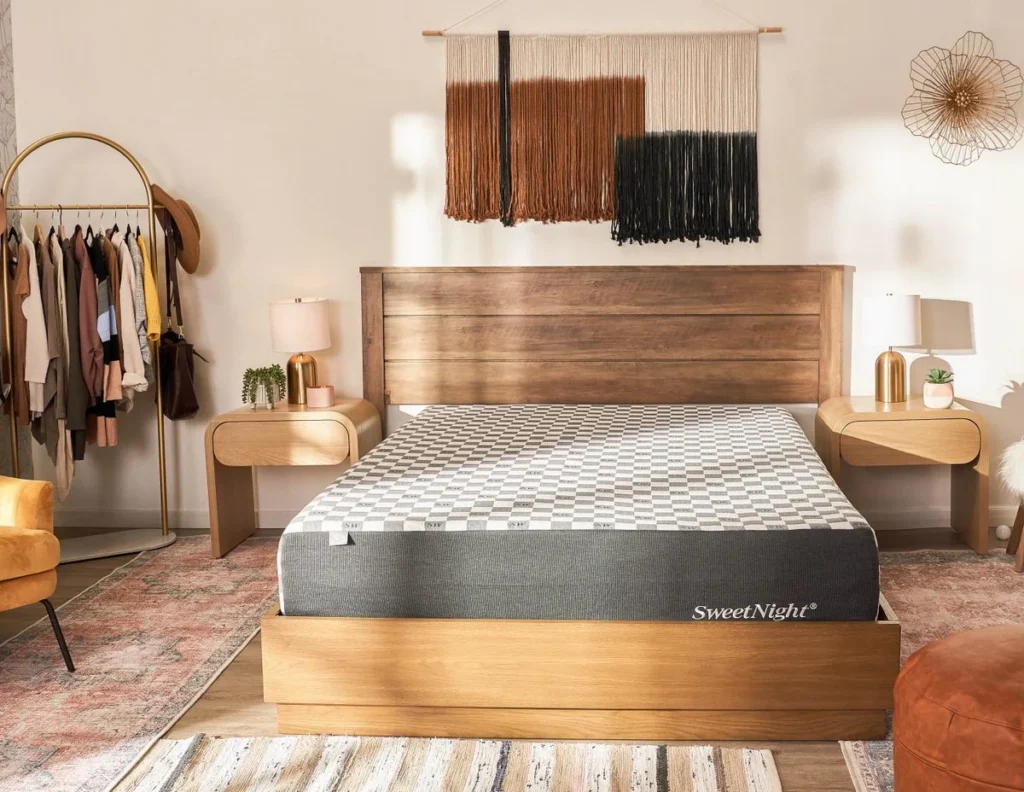
You should leave enough clearance to move safely and use the room without feeling boxed in. Good spacing makes night-time movement safer, improves airflow, and makes cleaning and bed-making far less annoying.
As practical targets, aim for 60 to 75 cm on each side you regularly use. If space is tight, 45 to 60 cm can work, but it will feel noticeably narrower, especially with bedside tables. At the foot of the bed, aim for around 60 cm, although you can go less if there is a wall or door that already limits movement.
Clearance is not just about you walking past. It is also about drawers opening, wardrobes being accessible, and doors swinging freely, all of which can demand extra centimetres.
The ‘real’ space calculation: mattress size + furniture movement
When you plan for a queen mattress, measure the biggest moving parts in the room, not just the empty floor. Think dresser drawers, bedside table drawers, cabinet doors, and the wardrobe opening path.
A useful habit is to open everything fully and measure how far it projects into the room. If a dresser needs 50 cm to open comfortably, your “walkway” must be that much wider; otherwise, the room works only when the furniture is closed.
If you need storage, choose pieces that fit the footprint of your room, not oversized furniture that looks good in a showroom. Slim cabinets, tall dressers, or a storage bed base can often give you the function you need without stealing circulation space.
Can Queen Mattresses Fit Comfortably in Smaller Bedrooms?
Yes, a queen can fit well in a smaller bedroom, but comfort depends more on layout than on the number on the floor plan. “Smaller bedroom” usually means apartment bedrooms, secondary bedrooms, or multipurpose spaces where storage and walkways matter as much as the bed.
As a tight but doable starting point, many people can make a queen work in a room around 3.0 m x 3.0 m, especially with smart furniture choices. If you want two bedside tables and easier movement for two people, something closer to 3.2 m x 3.4 m (or similar) tends to feel noticeably better.
A king can be brilliant for sleeping space, but it is often the wrong move in a small room because it steals the circulation space that keeps the room functional. In many homes, a queen paired with a supportive mattress and a well-built frame creates a better day-to-day experience than squeezing in a bigger size.
Guest rooms and home offices also tend to suit queens better. You get a generous sleeping surface without committing the entire room to a bed, which keeps the space flexible for desks, storage, and occasional rearranging.
When a king mattress makes more sense (and when it doesn’t)
A king makes sense when you can keep proper clearance on both sides and still access storage and wardrobes easily. If your room allows comfortable walkways plus bedside furniture, the extra width can genuinely improve sleep, especially for couples.
It does not make sense if the bed becomes the room, meaning you sidestep around corners, avoid opening drawers fully, or lose a clear entry path. If that is the trade-off, stick with a queen and put the budget into the parts you feel every night: mattress quality, proper support, and a sturdy frame.
What Bedroom Layout Works Best for Queen Mattresses?
The best starting layout is usually to centre the queen bed on the longest uninterrupted wall. This creates balance, supports two bedside tables if you want them, and keeps the room feeling intentional rather than squeezed.
Next, check doors and windows. Avoid blocking windows where possible, ensure the door swing does not hit the bed, and keep a clear path from the entry to at least one side of the bed you use most. Small layout decisions like shifting the bed 10 cm can be the difference between a room that feels calm and one that feels cluttered.
For bedside furniture, consider slim tables, small cabinets, or wall-mounted shelves where suitable. The goal is to keep your essentials close while protecting the walking space that makes the room comfortable.
If you need a dresser, place it where drawers can open fully without cutting off the main walkway. If storage is a priority, a bed frame with built-in storage can reduce the need for extra cabinets or benches that often eat up valuable floor area.
Furniture pairing that keeps the room feeling open
To keep a queen bedroom feeling open, pair the bed with furniture that is scaled to the room. Slim bedside tables, narrow drawers, and taller storage that uses vertical space usually work better than wide, low pieces.
If you want a dresser, make sure you can stand in front of it with drawers open, not just squeeze past it when everything is shut. And if you are choosing between an extra cabinet or a storage bed base, the storage base often wins because it adds capacity without adding another footprint.
How Do You Measure Your Room Before Buying Queen Mattresses?
Measure first, then shop. Start by measuring the room wall to wall for both length and width, and note skirting boards and any alcoves that change usable space.
Next, mark fixed features: windows, built-in wardrobes, power points, vents, and especially door swings. Doors and wardrobes often decide the layout more than the bed does, so treat them as non-negotiable zones.
Then decide what else must fit: bedside tables, a dresser, a cabinet, or a bench at the foot. Make sure you have at least one clear, comfortable path to the side you use most, because that is what you will feel every day.
Finally, re-check after accounting for the bed frame. Many frames add noticeable width and length, and headboards can add depth that affects how the bed sits against a wall and how much space remains at the foot.
A simple checklist to avoid the most common measuring mistakes
Confirm whether wardrobe doors slide or swing, because swinging doors need extra clearance. Check the door swing into the bedroom too, as it can steal the exact corner you assumed was free.
Plan space for any must-have furniture such as a dresser, cabinet, or a small bench, and measure how far drawers and doors open. Ensure you can still keep at least one clear path to the side of the bed you use most.
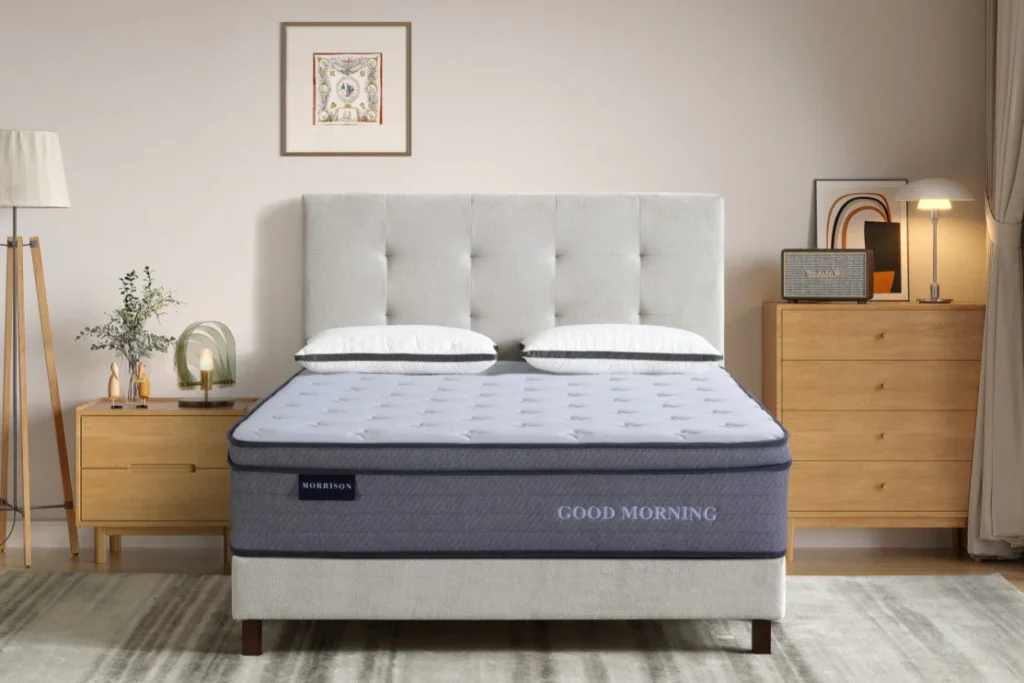
Lastly, do a final check using the full bed footprint, not just the mattress size. Include frame thickness and headboard depth, because those are the centimetres that usually catch people out when a queen “should fit” but does not feel right once it is in the room.
Releated Can You Use a Sofa Bed Every Night? 5 Models for Daily Sleep