

What size dining table should they buy?
They should choose a size that seats everyone comfortably and still leaves clear walkways. A table that is too large makes the room feel cramped and makes chairs hard to pull out.
As a baseline, many dining areas work best when there is at least 90 cm (36 in) of clearance from the table edge to walls or furniture. If theirs is a main traffic route, 105–120 cm (42–48 in) often feels easier.
How many people should the table seat day to day?
A structured buy dining table decision framework prioritises real-world usage patterns over edge-case scenarios such as occasional large gatherings. From a functional planning perspective, selecting the appropriate table size should be based on the number of people who dine together on a routine basis, as overspecification for rare events often introduces unnecessary spatial inefficiencies and day-to-day usability constraints within the living environment.
A practical rule is 60 cm (24 in) of table edge per person for comfortable elbow room. If they often use wider plates, serve family style, or want more personal space, 70 cm (28 in) per person can feel better.
What table dimensions match common seating counts?
They can use typical sizing to narrow options fast, then adjust based on their room and chair width. These are common, comfortable ranges, not strict rules.
- 4 people: round 90–110 cm (36–44 in), or rectangle about 120 x 75 cm (48 x 30 in)
- 6 people: round 120–135 cm (48–54 in), or rectangle about 150–180 x 90 cm (60–72 x 36 in)
- 8 people: rectangle about 200–240 x 95–105 cm (78–95 x 38–42 in)
- 10 people: rectangle about 260–300 cm (102–118 in) long
If they are tight on space, they should prioritise clearance and pick a slightly smaller top with slimmer chairs.
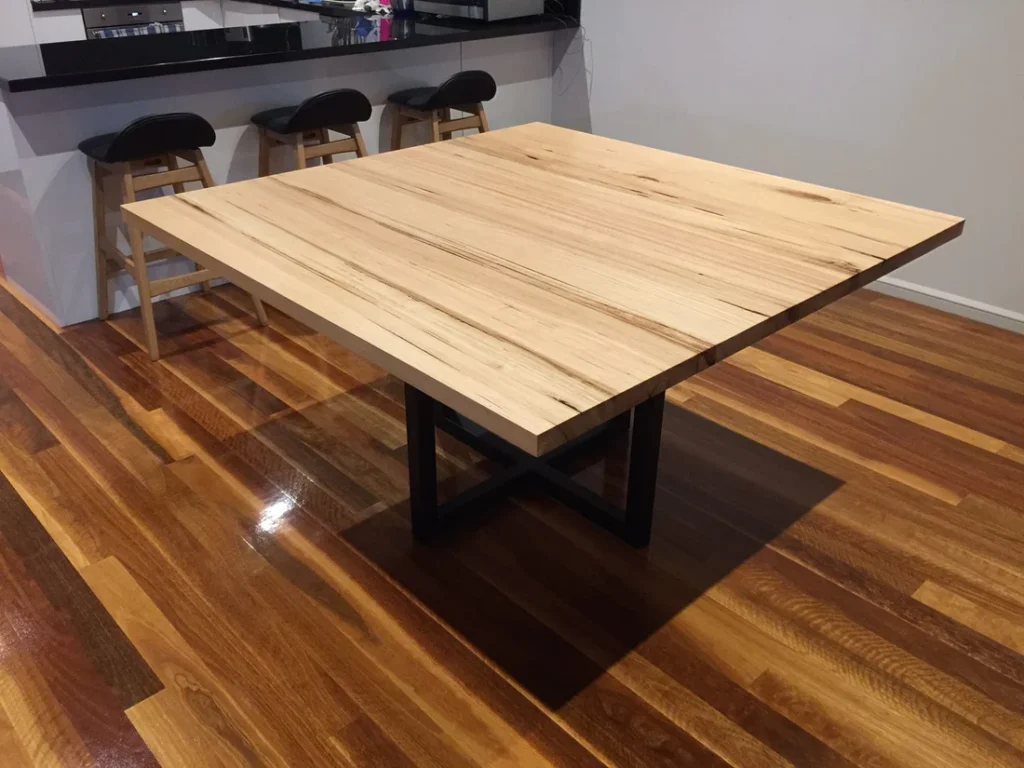
Should they choose a round, rectangular, oval, or square table?
They should choose the shape that fits their room layout and how people move through it. Shape affects both seating comfort and traffic flow.
Rectangular tables suit longer rooms and are easiest to size for larger groups. Round tables help conversation and work well in smaller or squarer rooms, but very large rounds can feel far apart. Oval tables soften corners and improve flow while keeping capacity. Square tables can be cosy for four, but scale poorly unless the room is large.
Do they need an extendable dining table?
They should choose an extendable table if they host occasionally but do not want a large footprint every day. Extensions solve the “daily fit vs. holiday seating” problem better than most alternatives.
They should check how the leaves store, how heavy they are, and whether one person can open it. If theirs is a rug-heavy room, they should test whether the table slides smoothly without snagging.
What height and leg style should they look for?
They should match table height to standard dining chairs to avoid awkward posture. Most dining tables are around 75 cm (29–30 in) high, which pairs well with chairs around 45 cm (17–18 in) seat height.
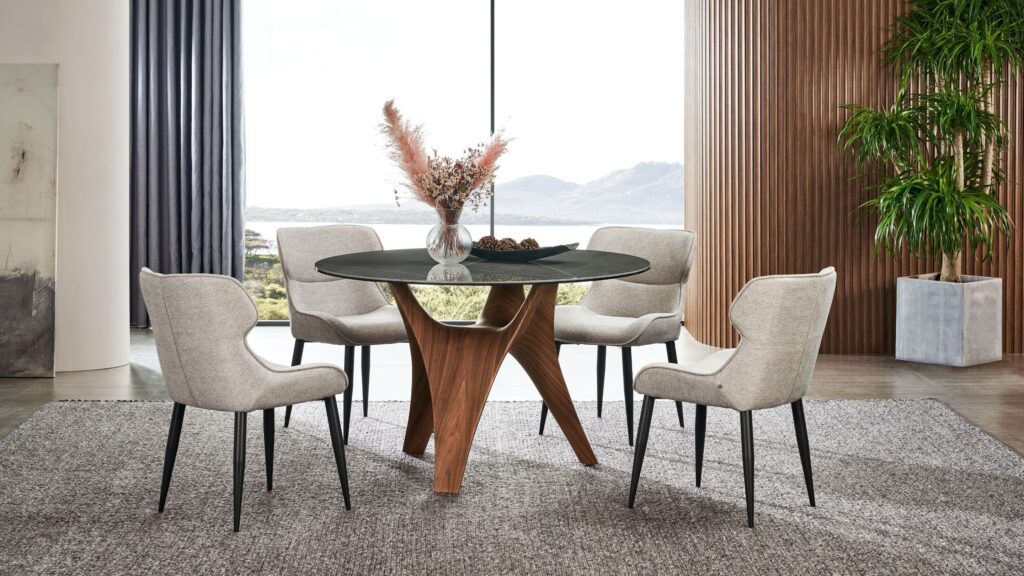
They should also look at the base. Four legs can block corner seating, while a pedestal base often makes it easier to squeeze in extra chairs. If they like bench seating, they should ensure the base does not interfere with knees and feet.
Which material is best for their lifestyle?
They should pick materials based on how the table will actually be used, not just how it looks in a showroom. A table is a work surface in most homes.
Solid wood ages well and can be refinished, but needs care around heat and moisture. Veneer can look great for less money but is harder to repair if deeply scratched. Glass feels lighter in small rooms but shows fingerprints and can be noisy. Stone or ceramic resists heat and scratches, yet can be heavy and less forgiving on dropped items.
What style should they choose so it still looks good later?
They should choose a style that matches their home’s overall tone and the chairs they already own or plan to buy. The safest long-term choice is usually a simple silhouette with one or two distinctive details.
Modern styles lean clean and minimal, often with slim tops and metal bases. Farmhouse tends to be chunkier with visible grain and warm tones. Mid-century uses tapered legs and lighter profiles. Traditional often has richer finishes and thicker edges. If they are unsure, they should pick a neutral wood tone and let chairs or lighting add personality.
How should they match chairs to the table?
They should confirm three things: seat height, chair width, and how chairs tuck under the table. A beautiful set that does not tuck or feels cramped becomes annoying fast.
They should allow enough spacing so chairs do not collide. Many setups feel comfortable with roughly 15 cm (6 in) between chair seats when filled, depending on chair shape. If they mix chairs, they should keep one unifying element, such as colour, material, or leg finish.
What quick checks should they do before buying?
They should measure the room, mark the table footprint with painter’s tape, and test pulling a chair back. This simple mock-up usually reveals problems early.
They should also check the table edge profile, stability, and finish. If theirs is a busy household, they should ask how the surface handles water rings, heat, and cleaning products. A table that fits the room and the routine will always feel like the right choice.
FAQs (Frequently Asked Questions)
What size dining table should I buy for my room?
Choose a dining table size that comfortably seats everyone and leaves clear walkways. Aim for at least 90 cm (36 in) of clearance from the table edge to walls or furniture, with 105–120 cm (42–48 in) preferred if it’s a main traffic route. Avoid oversized tables that make the room feel cramped or make chairs hard to pull out.
How do I determine how many people my dining table should seat daily?
Buy a table that fits the number of people who eat there most days, not just for rare occasions. Use 60 cm (24 in) of table edge per person for comfortable elbow room, increasing to 70 cm (28 in) if you use wider plates, serve family style, or want more personal space.
Which dining table shape is best: round, rectangular, oval, or square?
Select a table shape based on your room layout and traffic flow. Rectangular tables suit longer rooms and larger groups; round tables encourage conversation and fit smaller or squarer rooms; oval tables soften corners and improve flow; square tables are cozy for four but less practical for larger groups unless the room is spacious.
Should I consider an extendable dining table?
An extendable dining table is ideal if you occasionally host guests but prefer a smaller daily footprint. Extensions offer flexibility for ‘daily fit vs. holiday seating.’ Check how the leaves store, their weight, ease of opening, and ensure smooth sliding over rugs if applicable.
What height and leg style should I look for in a dining table?
Match your table height to standard dining chair ergonomics to ensure correct posture alignment—typically tables around 75 cm (29–30 in) pair with chairs featuring seat heights of approximately 45 cm (17–18 in), following dining table and chair height compatibility and ergonomic seating standards. Consider base configuration carefully: four-legged designs may obstruct corner seating access, whereas pedestal bases provide greater flexibility for additional seating arrangements. For bench seating setups, ensure the base structure does not restrict knee clearance or foot positioning to maintain comfort and usability.
Which materials are best suited for different lifestyles when choosing a dining table?
Select materials based on usage: solid wood ages well and can be refinished but needs care; veneer offers affordability but is harder to repair; glass lightens small rooms but shows fingerprints; stone or ceramic resists heat and scratches but can be heavy and unforgiving on dropped items.